
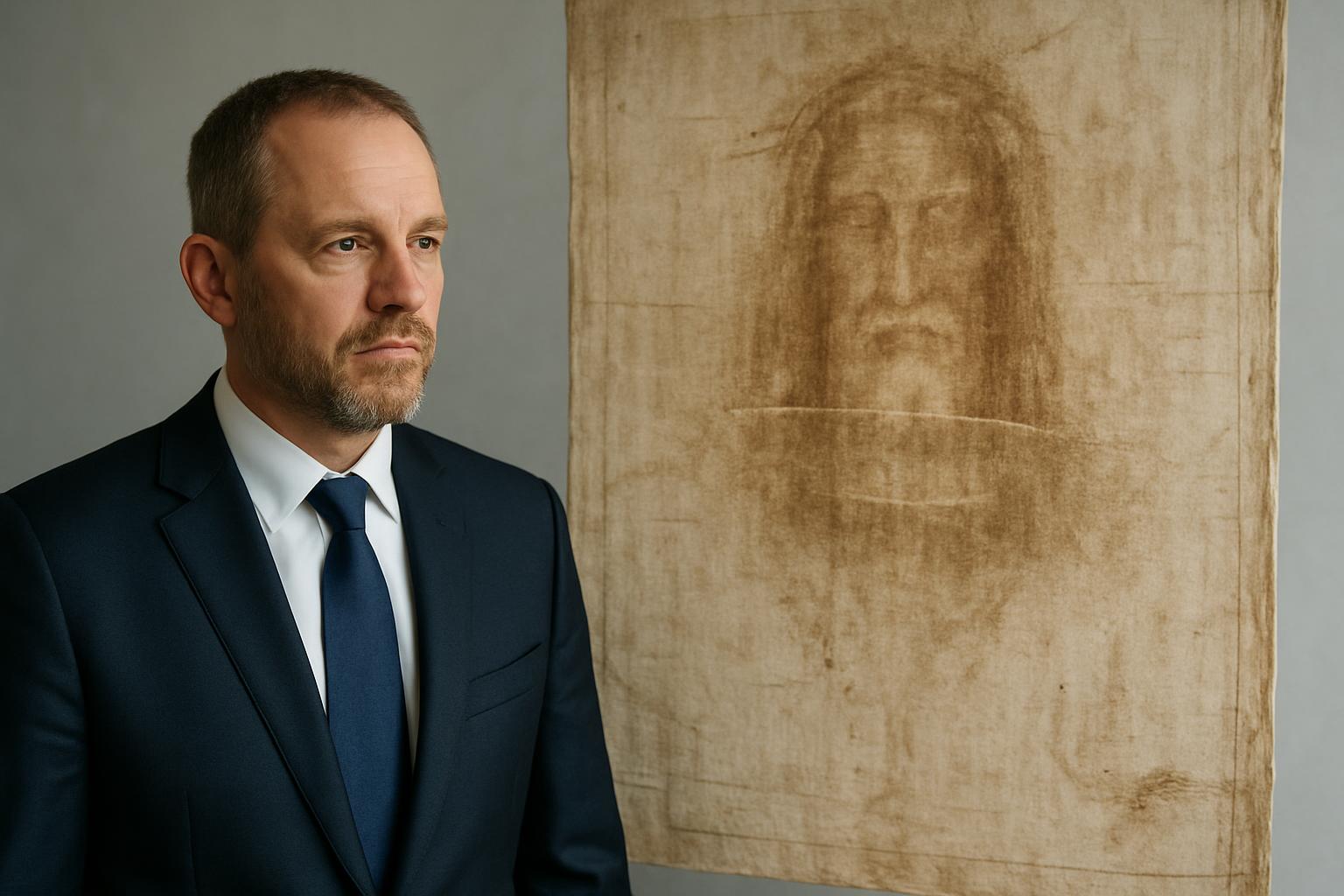
A nationally known New Testament scholar is drawing renewed attention after appearing on The Shawn Ryan Show, where he outlined what he described as the strongest historical and archaeological evidence supporting the origins of Christianity.
Dr. Jeremiah J. Johnston, founder of the Texas-based Christian Thinkers Society, joined host Shawn Ryan in Nashville for a wide-ranging conversation on biblical history. The episode has since been promoted by ChristianThinkers.com, which framed Johnston’s arguments as “the greatest biblical evidence” available today.
The interview comes at a moment when Johnston says the United States is experiencing a “biblical literacy crisis,” prompting him to take his message beyond academic settings and into mainstream media. His goal, he told Ryan, is to explain why he believes Christianity rests on a historically verifiable foundation.
A Conversation Rooted in Evidence
Johnston’s appearance on the podcast centers on a series of claims he has made for years: that the New Testament is the most well-preserved ancient text in existence, that archaeology consistently supports the cultural backdrop of the Gospels, and that non-Christian writers of the first and second centuries provide independent confirmation of Jesus’ life and the early Christian movement.
Ryan, a former Navy SEAL whose podcast has become known for long-form investigative interviews, pressed Johnston on how scholars evaluate ancient documents and what constitutes reliable evidence. The tone of the conversation was inquisitive rather than devotional.
Johnston pointed to what he described as a “mountain of documentation” — thousands of manuscripts, inscriptions, and external references — that he believes collectively support the reliability of the New Testament.
Manuscripts and the Question of Reliability
A central claim in Johnston’s argument is the sheer volume of New Testament manuscripts. He cites more than 5,800 Greek copies, along with thousands more in Latin, Coptic, Syriac, and other languages. Many date to within a few centuries of the original writings, a timeline he says is unusually short compared with other ancient texts.
“Historians accept works by Plato and Aristotle with far fewer manuscripts,” Johnston said on the show. “If we apply the same standard, the New Testament is the best-attested text in ancient history.”
Scholars generally agree that the manuscript count is unusually high. But experts also note that manuscript abundance does not automatically validate theological claims. It can confirm wording, transmission, and textual consistency but not supernatural events.
Still, Johnston argues that the manuscript record provides a strong foundation for evaluating the New Testament historically, especially when combined with other forms of evidence.
Archaeology and the World of the Gospels
Johnston also pointed to archaeological discoveries that he says corroborate the cultural and political environment described in the Bible. Among them:
inscriptions referencing Pontius Pilate, the Roman governor who ordered Jesus’ execution
ossuaries bearing names common in first-century Judea
excavated synagogues matching descriptions in the Gospels
city ruins that align with biblical geography
Archaeologists widely acknowledge that the New Testament’s references to places, officials, and social structures are historically accurate. The debate, however, lies in interpreting events described within those settings.
Johnston argues that archaeology cannot prove miracles, but it can confirm that the people and institutions mentioned in the Bible were real.
External Sources and Early Christian Identity
The conversation also touched on non-Christian writers who mentioned Jesus or early Christians, including Tacitus, Josephus, Pliny the Younger, and Suetonius. These references are brief but significant, offering independent confirmation that Christians existed, worshipped Jesus, and were known to Roman authorities.
Most historians — including secular scholars — accept that Jesus existed as a historical figure. Johnston uses this consensus to argue that Christianity’s origins can be studied using the same methods applied to other ancient movements.
A Cultural Moment for Biblical Literacy
Johnston’s appearance on the podcast comes amid what he describes as a growing disconnect between Americans and the historical roots of Christianity. He argues that many objections to the faith stem from misunderstandings rather than informed critique.
“People are rejecting a version of Christianity they’ve never actually studied,” he said.
ChristianThinkers.com echoed that sentiment in its coverage of the episode, presenting Johnston’s arguments as a corrective to what it called widespread misinformation about the Bible’s origins.
Reception and Debate
The episode has drawn interest from both supporters and critics. Some viewers praised Johnston for presenting evidence-based arguments in an accessible format. Others questioned whether manuscript counts and archaeological findings can meaningfully address theological claims.
Religious scholars contacted by the Inquirer noted that Johnston’s arguments reflect a common approach in Christian apologetics: emphasizing historical context to bolster confidence in scripture. They also pointed out that while many of his claims are grounded in widely accepted historical data, interpretations vary across academic disciplines.
A Broader Conversation About Faith and Evidence
Johnston’s appearance on The Shawn Ryan Show underscores a broader trend: religious debates increasingly intersect with discussions about evidence, history, and public literacy. As podcasts and digital platforms continue to shape public discourse, scholars like Johnston are finding new audiences for arguments once confined to academic settings.
Whether listeners accept his conclusions or not, the episode highlights a growing appetite for conversations that blend faith with historical inquiry — and a cultural moment in which questions about the origins of Christianity remain as relevant as ever.
