
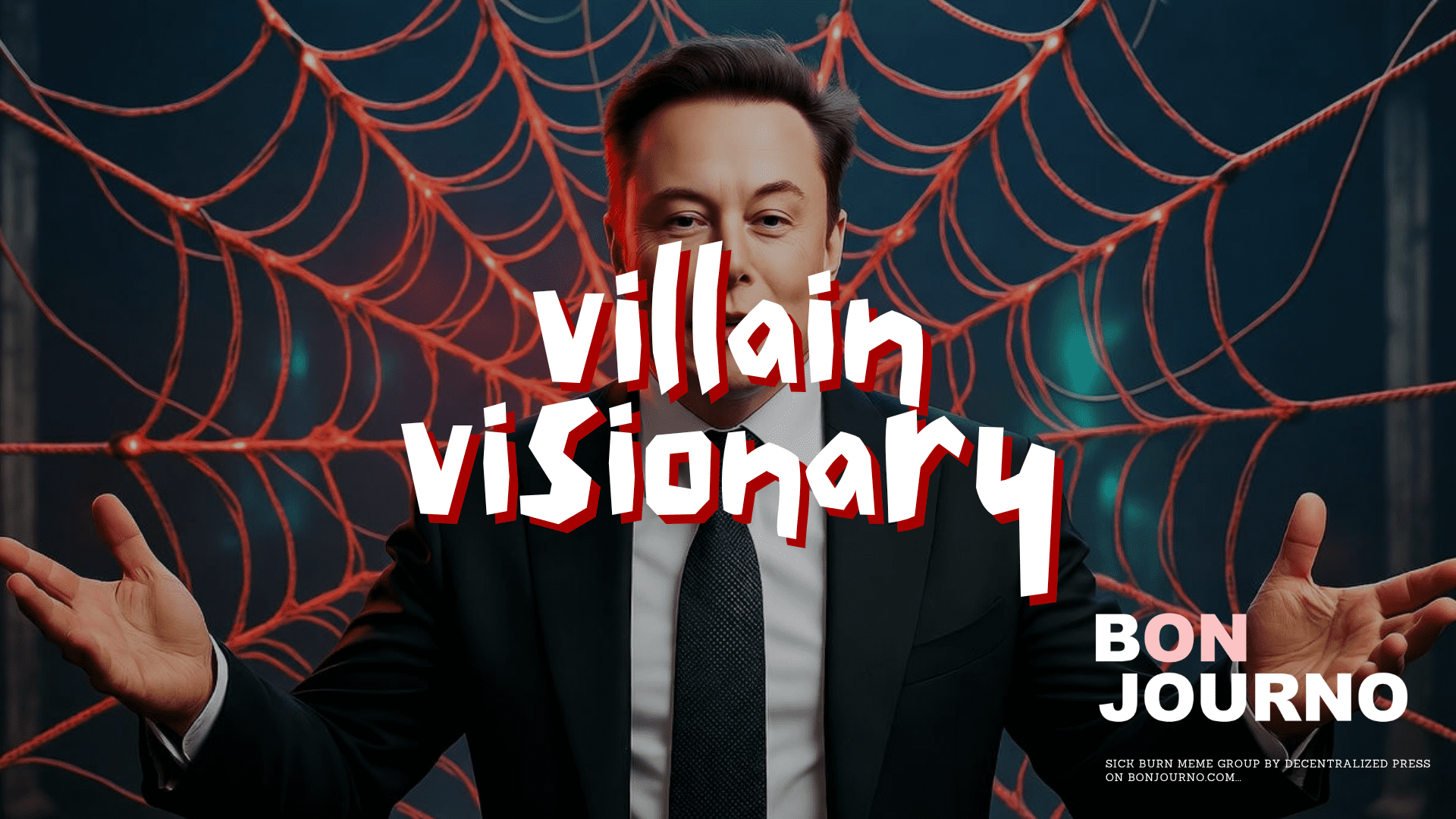
Picture this: Elon Musk as a real-life Bond villain (minus the tuxedo). By day, he’s the Elon the world cheers, with space rockets, electric cars, and brain chips. Behind the scenes, in this thought experiment, he is weaving a vast web of influence that no regulation, law, or moral compass can touch. The question haunting every tech skeptic: in the hidden folds of his empire, what if nothing is off limits?
Let’s imagine five “transgressions” in this "alternate universe":
1. Social Security infiltration for identity control
Suppose Musk used Tesla/X data pipelines to quietly tap into Social Security systems. He harvests SS numbers and financial records, converting them into leverage: blackmail material against politicians or CEOs who don’t kiss the ring. Real-world echoes: Musk’s DOGE team was recently cleared by an appeals court to access sensitive government data, including federal departments.
2. Neuralink mind control experiments
Under this dark hypothesis, Musk transforms Neuralink into a device for reprogramming thought. Implant a chip under the guise of medical benefit—and voilà: subtle nudges on beliefs, choices, loyalties. Ethicists already warn Neuralink lacks transparency and could be vulnerable to hacking and intrusion.
3. Starlink / satellite panopticon
Starlink serves the internet, they say—but in this scenario, Musk’s constellation becomes a real-time global surveillance grid. Intercepting communications, geo-tagging leaders, exposing secrets—while claiming it’s just connectivity.
4. X (formerly Twitter) as a propaganda engine
He tweaks algorithms, amplifies divisive voices, and buries dissent. Collects data on user behavior down to the micro-moment. Real events already vex regulators: X drew multiple privacy complaints for using EU users’ data to train AI models without permission.
5. Tesla’s sensor data for economic warfare
Vehicle cameras, autopilot logs, environmental sensors—all feed a massive databank. Under the hood: forecasting market vulnerabilities, exploiting proprietary insider intel, manipulating economic levers. Tesla drivers already complain they can’t meaningfully opt out of data collection—or their car loses function.
So who’s the Bond villain here? Maybe it’s not a universal “he,” but the systems that let someone like this proliferate.
In the real world, Musk is not (yet) omnipotent. But imagining him as a villain helps us ask urgent ethical questions: how much access, how much secrecy, how many lines can a charismatic genius cross before getting checked?
